If you let a flat or house in London with any gas appliance you supply, the law gives you a clear, recurring job: have the gas checked every year by a Gas Safe registered engineer, hand the record to your tenants and keep a copy. Most people still call the paperwork a CP12. Its formal name is the Landlord Gas Safety Record, and the duty behind it sits in regulation 36 of the Gas Safety (Installation and Use) Regulations 1998.
The rules themselves are short. The practical side is where landlords get caught out: tenants who will not answer the door, boilers in a cupboard of a mansion block with a flue nobody can see, a letting agent who assumed you had booked it, or a record that lists a fault nobody acted on.
This guide walks through what the check involves, what the engineer is looking for, what the outcomes mean and how to keep your paperwork in order. It is written for England, where most of our London work sits.
Key Takeaways
- What regulation 36 actually requires of a landlord
- What the engineer tests during the annual check
- Immediately Dangerous, At Risk and Not to Current Standards
- Timing the check and keeping your original expiry date
What regulation 36 actually requires of a landlord
Regulation 36 puts three duties on anyone who lets a home under a relevant tenancy. You must keep every gas appliance, fitting and flue you provide in a safe condition. You must have a safety check carried out on each appliance and flue at least every 12 months by a Gas Safe registered engineer. And you must keep a record of each check and share it with your tenants.
The sharing rules are specific:
- Existing tenants must get a copy within 28 days of the check being done.
- New tenants must get a copy before they move in.
- You must keep each record for at least two years, so you can show the history if asked.
A digital copy is acceptable as long as the tenant can access it and print it if they want to. The record itself should show the property address, the landlord or agent details, the date of the check, the engineer's name, signature and Gas Safe registration number, each appliance checked and its location, any defects found and what was done about them.
What the engineer tests during the annual check
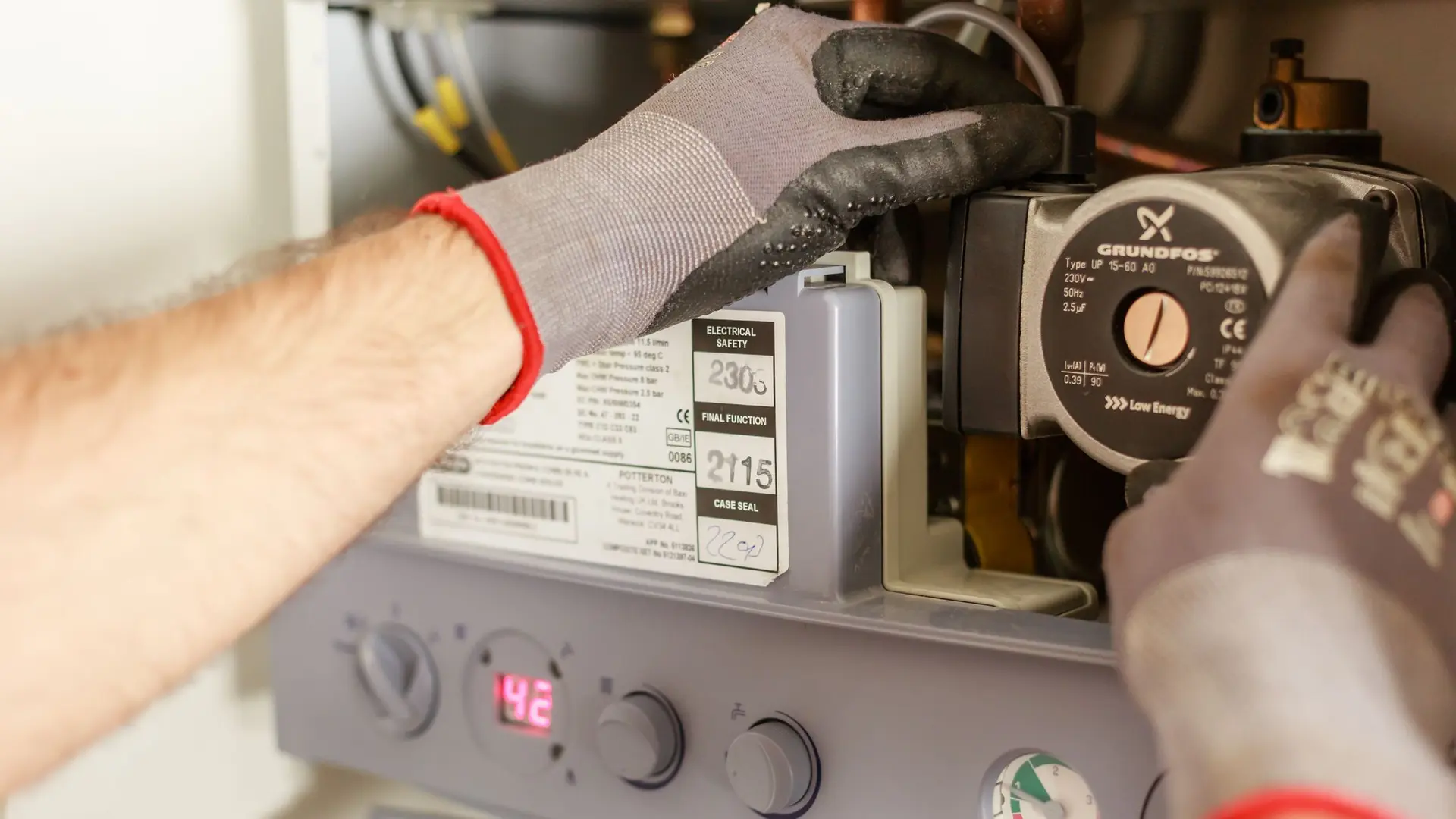
A proper landlord gas safety certificate is not a quick look at the boiler. The engineer works through the installation and each appliance you supply: boiler, gas fire, gas hob or cooker, and any water heater. For each one they record what they found, and the checks usually cover:
- A tightness test on the installation pipework to confirm there is no gas escape.
- Burner pressure or gas rate, to confirm the appliance is burning the right amount of gas for its heat input.
- Flue flow and spillage tests on open-flued appliances, and a check that room-sealed flues are intact, correctly terminated and properly supported.
- Ventilation, making sure any air vents the appliance needs are the right size and not blocked or covered.
- Safety devices, such as flame failure devices on hobs and fires and the controls that shut a boiler down if something goes wrong.
The check is a safety inspection, not a full service. Many landlords book the two together, so the engineer can clean and adjust the boiler while they are there. If you want that, ask for an annual boiler service at the same visit rather than assuming it is included.
Immediately Dangerous, At Risk and Not to Current Standards
When an engineer finds a problem, they classify it using the industry's unsafe situations procedure. The label on the record tells you how urgent the fix is.
Immediately Dangerous (ID) means the appliance or installation is a present danger to life or property. With the responsible person's consent, the engineer disconnects it from the gas supply and attaches a warning label. It must not be reconnected until it has been repaired.
At Risk (AR) means one or more faults could become dangerous. The engineer turns the appliance off, with consent, and labels it. It stays off until the fault is corrected. If consent to make it safe is refused, the engineer can report the situation to the gas emergency service.
Not to Current Standards (NCS) means the installation does not meet the rules that apply today but is not unsafe. It can stay in use, though it is worth planning a fix. The main point for landlords: the record only proves a check took place. If it lists an ID or AR item, the duty to keep the appliance safe means you need the repair done, then keep the paperwork showing it.

Timing the check and keeping your original expiry date
Before a 2018 change to the regulations, getting the check done a few weeks early meant the 12 month clock reset from that earlier date, so you lost time every year. That changed. You can now have the check carried out in the last two months before the deadline and keep the original expiry date. A check done 10 or 11 months after the previous one is treated as if it had been done on the anniversary.
That two month window is useful in London, where tenants work shifts, travel, or share a house with people who have different schedules. Book early in the window, so a missed appointment still leaves time for a second or third attempt before the deadline.
If you have several properties, keep a simple list of addresses, expiry dates, the date each tenant received their copy and any open defects. It takes a few minutes to maintain and saves a scramble when an agent, lender or insurer asks for records.
Tenants' appliances, pipework and carbon monoxide alarms
Your duty covers the appliances and flues you provide. If a tenant brings their own gas cooker, for example, checking it is not your responsibility. The pipework is different: the installation pipework that feeds their appliance is still yours to keep safe, and any flue serving their appliance that you provide also falls to you. Note tenant-owned appliances on the record so it is clear what was and was not tested.
In England, the Smoke and Carbon Monoxide Alarm (Amendment) Regulations 2022 added a separate duty from 1 October 2022. Landlords must fit a carbon monoxide alarm in any room used as living accommodation that contains a fixed combustion appliance, apart from gas cookers. That includes rooms with a gas boiler, gas fire or a solid fuel stove. There must also be a smoke alarm on each storey used as living accommodation.
Alarms must be working at the start of each new tenancy, and you must repair or replace them once told they are faulty. A good habit is to test them on the day of the gas check and note the result.
HMOs, mansion blocks and getting access from tenants
Shared houses and flats in mansion blocks raise extra questions. In an HMO, you are responsible for every appliance and flue you provide, including those in communal areas, and each tenant must receive a copy of the record. In a mansion block, some flues run through shared voids or serve several flats. Find out from the freeholder or managing agent who maintains communal flues and plant, and make sure any boiler flue running through a ceiling or boxing has inspection hatches, as the engineer needs to see its full length to pass it.
Access causes more missed deadlines than anything else. The law expects you to take all reasonable steps, not to force entry. In practice:
- Give written notice with a clear date and time, and offer alternatives.
- Follow up by email and text if there is no reply, and try again on a different day.
- Keep copies of every message, note each visit and why it failed.
That record shows you tried if the check runs late through no fault of yours. When you are ready to book, a Quick Quote Online is available on this page.